Evidence in motion
Our team has captured, modeled, and studied human movement for decades, defining its relationship to health status and building the tools to make that knowledge clinically accessible.
OUR MISSION
Advance the quality and longevity of human movement.
OUR APPROACH
Koast uses a clinic-first approach to operationalize decades of movement evidence, ensuring it is accessible, interpretable, and actionable in every healthcare environment.
STORY
One of your body's most important vital signs is how it moves.
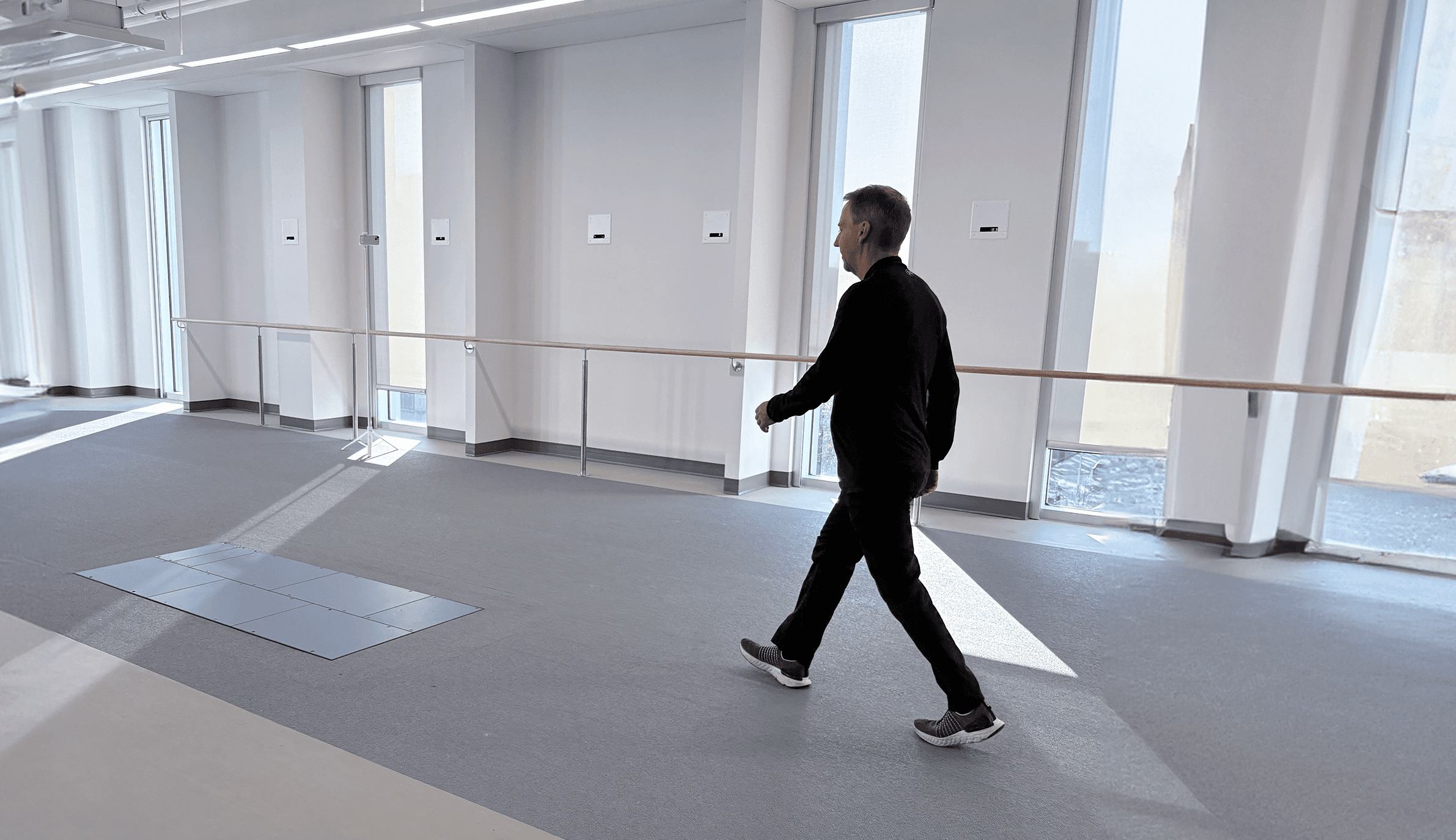
Walking is considered a vital sign of health, with strong links to longevity, functional independence, and disease trajectory. Yet it has been scarcely measured in clinical contexts, captured instead with tools designed for laboratories where space, time, and personnel are abundant.
Dr. Janie Wilson has dedicated over twenty-five years to quantifying the relationship between gait and health, building the evidence for objective movement analysis in diagnosis, monitoring, and treatment planning.
To translate this evidence into practice, she has led the development of accessible motion capture approaches deployed directly in clinics across Canada, building a network of multidisciplinary research teams along the way. But with each deployment, the same insight has been reinforced: the science is ready, but the delivery mechanism is not.
Koast is the product of this realization. Purpose-built from the clinic outward, it removes the need for dedicated infrastructure, on-site technical expertise, and manual processing. It is not a research instrument adapted for clinical use. It is a clinical system designed to generate, interpret, and share evidence at the point of care.